
Why Choose a Renovation Loan?
Renovating a home can be the best strategy for converting any home into the perfect home. Either when there aren’t many options on the market or enhancing an existing home versus selling and buying. Homebuyers can enhance a flawed property before or after moving into the property and convert into the perfect home, while homeowners can enhance the features and value of their home without draining their savings.
What is a renovation loan?
Renovation loans can finance the purchase (or refinance) and renovation of a property in one loan. Think of a construction loan to build a home but in this case, the home is already in place. Additional funds are added to the loan that will be used to make improvements to the property after the transaction closes.
One of the big draws of renovation loans is that the maximum loan amount is based on the “subject to improved value” which is determined by the appraiser based on the future value of the home after the improvements are made to the property. On both purchase and refinance transactions, we are able to leverage the extra value the improvements will add to the existing property.
Another big draw- we can close on a home in “as is” condition. Normal mortgage financing requires a home to meet certain minimum financing standards which vary by loan type but in essence, the property must be in move in, live in condition without any health or safety issues. Utilities and all components would need to be functional and operational. After the transaction closes, any issues with the property can be corrected or the property simply enhanced with the renovation funds to bring the property up to standards.
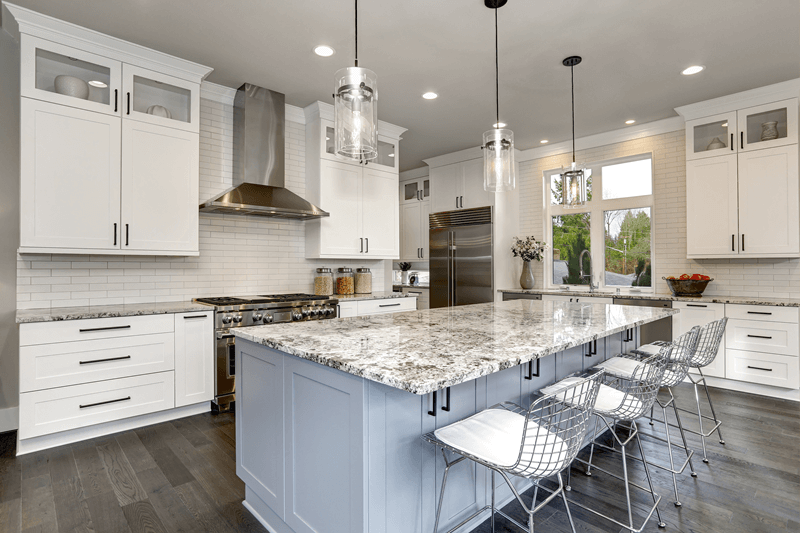
Renovation loans can also finance a home in perfect shape but desired upgrades can be included to enhance the property. Enhancements like remodeling kitchens or bathrooms, installing new flooring, HVAC repairs or upgrades, adding a garage or ADU (accessory dwelling unit), repairing or installing septic systems are some of the many items a renovation loan can address. Any improvement deemed permanent to the property and theoretically adding value can be include. Each loan type has certain limitations or flexibilities on what is allowed.
On a purchase, when the transaction closes, the purchase of the home is funded, then additional funds from the loan are set aside in an escrow account that will be used to pay predetermined professionals to make predetermined required or desired repairs or upgrades to a property AFTER the transaction closes. At this point in time, the buyer owns the home and the contractor can start working on the property. Funds to pay for the improvements are disbursed as needed thru draws to the contractor.
On a refinance, the difference is of course no down payment is normally required since equity in the property would come into play. The new loan would pay off any current mortgages on the property and establish an escrow account to fund the renovations to the property and if desired roll in the closing costs.
On purchases and refinances, if the renovations will be extensive and the property may not be habitable for a period of time, as long as room is available in the maximum loan amount, mortgage payments can be rolled into the escrow account as well to eliminate the potential of double housing payments.
Residential renovation loans are usually fixed rate programs that close like a normal loan with full mortgage payments starting a month or so after the closing date. The principal and interest payments are based on the full amount of the loan, like a normal mortgage. The down payment is based off the total adjusted acquisition cost – the purchase price plus the cost of renovations added together.
Renovation loans are normally available in 30, 20- and 15-year fixed rate terms and can be used to purchase owner occupied, second home and investment properties.
By time the renovation phase is completed, the home needs to be in move-in, live-in condition without any lingering repair or safety issues.
Renovation loan types offered:
- FHA 203K – This government insured loan is available for owner occupied 1-4 unit properties. As little as 3.5% down payment is required. This is the industry benchmark program that allows generous underwriting flexibilities and loan calculations. This program allows for a streamlined version that is for cosmetic type of work and a more involved version that is used for more extensive work that multiple draws will be needed on such as extensive renovations, structural modifications; home relocation; additions, etc.
- Conventional renovation loans can finance owner occupied, second homes and investment properties. Multi-unit owner occupied properties can also be financed. The down payment required will depend on occupancy type and buyer profile. On an owner occupied, it can be as low as 3%. On second home and investment property normally a 20% down payment is required.
- VA renovation loans- Financing on owner occupied 1-4 unit properties. 100% financing available! Eligible Vets can use this feature to buy or refinance a home and roll in costs to renovate their property.
- Fix & Flip or Fix to Rent. Shorter term renovation loans for investors that allow for the home to be re-sold or converted into a rental property once fixed up. These loans normally are evaluated by a combination of the loan to cost, loan to value and the buyer profile. These are normally low doc in format (re income docs). The down payment is factored by transaction & investor profile. Expect a 20% +/- down payment dependent on credit/experience/loan to value. Title to these properties are normally held in an LLC or similar.
Types of renovations that can be done to a property:
Renovation loans can finance virtually any improvement to a property that is considered permanent and theoretically add value. Each program has it’s flexibilities and limitations. From painting to additions; adding or repairing utilities like well or septic systems; finishing a basement or attic; raising a home to address flooding issues to landscaping to address drainage issues; even relocating the home to a new location.
Each program allows basic renovations but each has different flexibilities on the scope of work allowed. Every renovation loan must include the costs or labor and materials for any work preformed. Soft costs for items like architectural exhibits; consultant fees if applicable; draw inspections, permits, title update can also be included in the loan.
Non-structural renovations:
- Replacement of electrical, HVAC, plumbing, installation of well and/ or septic tanks
- Aesthetic changes and upgrades, such as new siding, paint and landscaping
- Elimination of health and safety hazards, such as lead-based paint and mold
- Remodeling kitchens and baths
- Finishing a basement
- Installing accommodations for handicap access
- Adding or repairing a garage
- Repairing or replacing a deck
- repairing an existing pool
And more!
Structural renovations:
- Structural repairs to a roof
- Raising a home to eliminate flooding issues
- Convert 2, 3 or 4 units to single family
- Add a garage
- Construction of a new accessory dwelling unit -ADU
- Completely rebuilding a home on a modified existing foundation (FHA203K only)
And more!
Luxury renovations allowed on Conventional Renovation loans:
- Custom swimming pool
- Hot tub or sauna
- Outdoor kitchen
- Extensive landscaping projects
- Entertainment room
- Music/art studio
- Custom fitness center
Contact Renovation Lender - Mark Vernon to assess whether a Renovation Loan is the right fit for your financial situation.
